






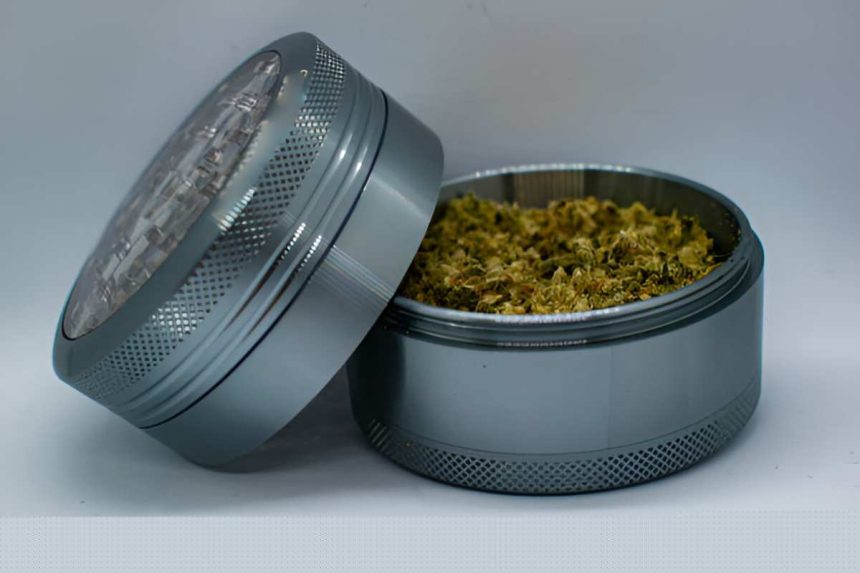
A stainless steel herb grinder sits at the crossroads of habit and health. Whether you’re vaping, smoking, or just grinding herbs for culinary use, upgrading from a cheap aluminum or plastic grinder to 100% stainless steel can make a real difference in safety, durability, and consistency.
Table of Contents
What is a Stainless Steel Herb Grinder?
A stainless steel herb grinder is a hand‑held device made entirely from food‑grade stainless steel that breaks down herbs (most commonly cannabis) into smaller, uniform pieces for smoking, vaping, or cooking.
Most stainless models look like compact metal cylinders with sharp teeth or milling plates on the inside. As you twist the top over the bottom, the herbs get shredded and fall into a lower chamber—sometimes filtered through a screen that collects pollen (kief).

How it differs from aluminum and plastic grinders
Cheaper herb grinders are usually made from anodized aluminum or acrylic/plastic. Aluminum dulls over time, and tiny flecks can end up in your ground material. Plastic is lightweight but less durable and can stain or absorb odors.
Stainless steel sits in the middle: it’s heavier, more inert, and virtually immune to corrosion or metal shavings when manufactured correctly.
Why “stainless steel” matters for health and durability
High‑quality stainless steel (like 304 or 316) is widely used in food prep and medical tools because it resists rust and doesn’t leach harmful metals. For a herb grinder, this means:
- No loose aluminum shavings mixing with your herbs.
- Minimal risk of discoloration or chemical reactions even with sticky, resinous material.
- A grinder that can last years instead of months.
Why Choose Stainless Steel Over Aluminum?
If you’ve ever owned an aluminum grinder, you’ve probably noticed its teeth getting dull, chipped, or sticky over time. Stainless steel fixes most of that.
Safety and no metal shavings
Aluminum grinders can shed tiny metal particles as the teeth wear down, especially with heavy use. Stainless steel is much harder, so it doesn’t shed in the same way and is considered safer for regular use.
This is especially important if you’re health‑conscious about vaping or smoking, where you inhale the ground material directly.
Durability and wear resistance
Stainless steel grinders like the Herb Ripper, Odin, and Flower Mill are built to last. Their teeth rarely dull, and the threads withstand repeated opening
Types of Herb Grinders
| Type of Herb Grinder | Description | Best For |
| 2‑piece grinder | Simplest design: a top grinding chamber and a bottom collection chamber with no screen. Herbs are shredded and collected in the same space. | Beginners, casual users, compact carry; lowest cost option. |
| 3‑piece grinder | Adds a mesh screen between the grinding chamber and a storage chamber. The screen filters out kief (trichomes), which drops into the bottom chamber. | Users who want kief collection without extra bulk. |
| 4‑piece grinder | Further adds a separate kief chamber beneath the screen, so your ground herbs and kief are stored in different compartments. | Regular users who want maximum kief yield and cleaner storage. |
| 5‑piece grinder | Advanced version with multiple screens or extra chambers for improved kief separation and storage. | Enthusiasts and collectors who want maximum trichome capture. |
| Twist‑and‑turn grinder | Most common manual style: open the lid, add herbs, twist the top over the bottom to grind. Comes in metal, acrylic, and wood. | Everyday grinding, joints, and portable use. |
| Electric / battery‑powered grinder | Powered device that grinds herbs with a button press; no twisting required. | High‑volume grinding, limited‑hand‑mobility users, or commercial use. |
| Hand‑crank grinder | Uses a crank handle to rotate the grinding mechanism, making it easier to use with less wrist strain. | Users who grind frequently or have joint/mobility issues. |
| Flat / card‑style grinder | Ultra‑thin, card‑like design that fits in a wallet; usually 2‑piece and simple grinding action. | Discreet travel, on‑the‑go grinding. |
| Metal grinder (stainless/aluminum) | Made from metal (often stainless steel or anodized aluminum); more durable but heavier. | Long‑term users, vaporizer‑friendly grinding, durability‑focused buyers. |
| Acrylic / plastic grinder | Lightweight, inexpensive, and colorful; less durable and can stain over time. | Budget buyers or first‑time users. |
| Wooden grinder | Made from wood; often has a natural, aesthetic look but may wear faster and absorb odors. | Users who prefer a premium, organic look and feel. |
What Are Electric Herb Grinders?
Electric herb grinders are battery‑ or USB‑powered devices that grind herbs (including cannabis, spices, or culinary herbs) with the push of a button instead of twisting or cranking a manual grinder.
They typically offer:
- Faster grinding (seconds instead of 10–30 seconds of twisting).
- Consistent texture (fine to medium depending on the model).
- Compact, often travel‑friendly designs.
Top‑Reviewed Electric Herb Grinder Types
1. Portable automatic electric grinders
Examples: small USB‑rechargeable herb grinders like the “K5”‑style automatic grinder.
Pros (based on user reviews):
- Totally automatic: one‑button operation, no wrist strain.
- Rechargeable USB battery, so you don’t need AA/AAA batteries.
- Compact size fits in drawers, bags, or travel kits.
- Multiple grinding plates for fine vs coarse texture.
Cons (common in reviews):
- Small chamber (often around 5 g), so you can’t grind large batches at once.
- Blades and plastic parts need regular cleaning to avoid odor buildup.
Best for:
Light to medium users, travelers, or people who hate twisting manual grinders.
2. “Best Electric Herb Grinder”‑style auto grinders
Examples: ForbiddenFruitz “Best Electric Herb Grinder” and similar branded automatic units.
Pros (from storefront reviews and marketing):
- Precision‑made stainless‑steel blade teeth for a fluffy, even grind.
- Integrated dispenser‑style spout so you can pour ground material directly into a bowl or vape without losing herb.
- Uses an electric motor so you only twist the top once and the motor does the rest.
Cons (based on similar e‑comm reviews):
- Battery life and noise level can vary by model.
- Some users report slower grinding if buds are very dense or sticky.
Best for:
Vaporizer and pipe users who want a hassle‑free, consistent grind without threads or sticky fingers.
3. Electric‑assisted / electronic dispensing grinders
These are technically manual‑style grinders with an electric drop‑mechanism (e.g., Tectonic9‑type units).
Pros:
- You manually grind the herbs, but the electric dispensing funnels the ground material into your device.
- Still very consistent for vaporizers.
Cons:
- Needs charging for the electronic part.
- Slightly more complex than a pure manual grinder.
Best for:
Vape‑focused users who want convenience without fully switching to an auto‑motor grinder.
How Electric Grinders Compare to Manual Ones
| Feature | Electric Herb Grinders | Manual Herb Grinders |
| Effort required | Minimal (button‑press). | Moderate (twisting or cranking). |
| Grind speed | Very fast (2–5 seconds). | Slower (10–30 seconds). |
| Consistency | Often very consistent, especially higher‑end models. | Depends heavily on user technique. |
| Battery dependence | Needs charging or batteries. | No power needed. |
| Portability | Usually compact, but some models are bulkier. | Usually very compact and lightweight. |
| Maintenance | Blades and plastic parts need cleaning; motor has no moving parts if designed well. | Teeth and threads need regular cleaning; no electronics to fail. |
What to Look for in Electric Herb Grinder Reviews
When reading or writing electric herb grinder reviews, consider these points:
- Grind consistency: Does it leave fluffy, uniform herb good for vapes and joints, or does it mash everything into dust?
- Ease of cleaning: Are the blades and chamber easy to disassemble and wipe down?
- Capacity: How many grams fit in one batch (usually 3–10 g for typical portable units)?
- Battery & charging: USB‑rechargeable vs AA; how long between charges?
- Noise level: Is it quiet enough for home use, or is it loud and buzzy?
- Build quality: Plastic vs metal‑reinforced body; does it feel cheap or solid?
Quick Electric Herb Grinder Review Snapshot
- Best for speed and convenience: Small USB electric grinders like the K5‑style automatic grinder.
- Best for full‑feature electric grinding: Branded “Best Electric Herb Grinder”‑style units (e.g., ForbiddenFruitz) with stainless‑steel blades and dispensers.
- Best for vapers who still like manual control: Electric‑assisted dispensing grinders like Tectonic9.
Conclusion
In short, electric herb grinders are a great upgrade if you value speed, consistency, and convenience over the simplicity of a manual grinder. They grind herbs in seconds, reduce hand strain, and work well for vapes and joints—especially compact USB‑rechargeable models.
For casual and travel‑focused users, a small automatic electric grinder is usually enough. For more serious or frequent use, higher‑end electric or electric‑assisted grinders with stainless‑steel blades and dispensers offer better durability and control.
Ultimately, the best electric herb grinder is the one that matches your grinding volume, cleaning habits, and whether you prioritize portability or full‑feature performance.