






Ketamine Assisted Therapy (KAT or KAP) combines low-dose ketamine administration with psychotherapy to treat mental health conditions like treatment-resistant depression, anxiety, PTSD, and addiction.
It leverages ketamine’s rapid antidepressant effects (onset in hours) and dissociative state to enhance therapy breakthroughs, unlike traditional talk therapy alone.
Table of Contents
How it Works
An individual speaking with a psychotherapist during a session.
Ketamine, an anesthetic, blocks NMDA receptors, boosts neuroplasticity, and disrupts negative thought loops, creating a “window” for processing trauma. Sessions (1–3 hours) use IV, IM, sublingual, or nasal esketamine under supervision, followed by integration therapy.
- Dosing: Starts low (sub-anesthetic) for active talk; escalates for deeper immersion with music/eye masks.
- Protocol: 6–8 sessions over weeks, plus maintenance; effects last 1–2 weeks per dose.
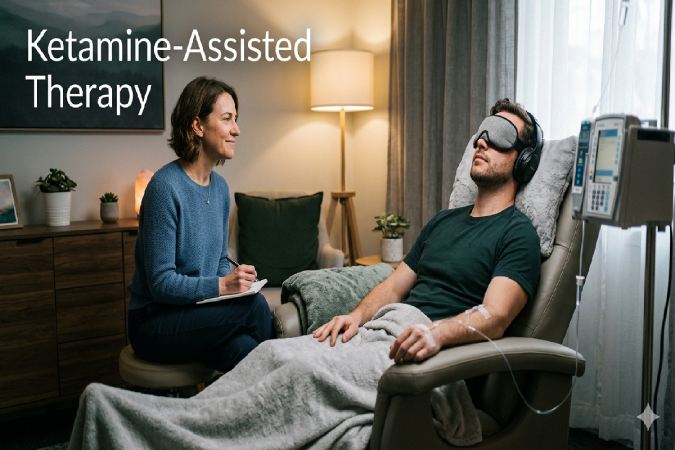
A typical session involves a relaxed setting where patients recline, receive ketamine, and work with a therapist to explore insights, much like this guided psychotherapy environment.
Conditions Treated
- Depression (70–80% response in resistant cases after 1–4 sessions).
- PTSD, OCD, social anxiety, substance use.
- Chronic pain with emotional overlay.
Cleveland Clinic notes quick suicidal ideation relief (hours/days).
Benefits and Evidence
- Rapid relief: Unlike SSRIs (weeks), ketamine acts in 24–72 hours.
- Synergy: Boosts therapy outcomes by 2–3x via emotional flexibility.
- Studies: 60–70% remission in trials; FDA-approved esketamine (Spravato) nasal spray for depression.
Only 20% of US ketamine clinics offer full KAP.
What are common side effects of ketamine assisted therapy
Common side effects of ketamine assisted therapy (KAT/KAP) are typically mild, short-lived (resolving within 1–4 hours post-dose), and manageable in a clinical setting.
Most Frequent Side Effects
These occur in 30–70% of sessions, especially with IV/IM dosing:
- Dissociation: Feeling detached, “spacey,” or out-of-body (therapeutic for insights but can feel unsettling).
- Nausea/vomiting: Affects 20–40%; pre-treated with antiemetics like ondansetron.
- Dizziness/lightheadedness: Common during peak (15–30 min); avoid driving 24 hours post.
- Elevated blood pressure/heart rate: Temporary (peaks at 30 min); monitored closely.
Psychological Effects
- Altered perception: Vivid dreams, visual distortions, mild hallucinations (50%+ report).
- Emotional shifts: Temporary anxiety increase or “feeling weird/unreal” (resolves quickly).
Less Common (5–20%)
- Drowsiness/fatigue, blurred vision, mild headache, numbness.
- Rare: Confusion, agitation (usually dose-related).
Serious risks (e.g., respiratory depression, mania) are minimal at sub-anesthetic psychiatric doses (<1 mg/kg IV) vs. anesthesia use. No long-term cognitive harm in studies; bladder issues tied to chronic recreational abuse, not therapy.
| Side Effect | Frequency | Duration | Management |
| Dissociation | 50–80% | 30–90 min | Eye mask, music, therapist guidance |
| Nausea | 20–40% | 1–2 hrs | Antinausea meds, light meals pre-dose |
| Dizziness | 30–50% | 1–4 hrs | Hydration, rest post-session |
| BP Rise | 10–30% | 30 min | Vital monitoring |
Discuss history (hypertension, psychosis) with providers; effects fade faster with integration therapy focus.
What is the success rate of Ketamine for Depression
Ketamine therapy for depression, especially treatment-resistant cases, shows response rates of 60–80% in clinical studies, with rapid onset (often within 24–72 hours) far surpassing traditional antidepressants.
Key Success Metrics
- Response rate (≥50% symptom reduction): 52–71% after 1–3 IV doses; up to 67% in multi-site trials like Bio-K (MADRS scores drop from severe ~28 to ~11).
- Remission (near symptom-free): 30–55%; e.g., 52% achieved full remission post-3 infusions in resistant depression.
- Suicidal ideation relief: 70–89% improvement within hours; lifesaving for acute crises.
For ketamine-assisted psychotherapy (KAP), integration boosts durability—60–70% maintain benefits 1–3 months vs. ketamine alone.
Realistic Factors
Best for treatment-resistant depression (TRD) (30% of cases unresponsive to 2+ meds). Effects last 1–2 weeks per dose; 6–8 sessions needed, then maintenance.
| Study/Trial | Response Rate | Remission | Duration Noted |
| Bio-K (2024) | 67% | 52% | 24 hrs post-3 doses |
| Harvard ECT Comparison | 55% | N/A | 6 months sustained |
| Multiple Reviews | 60–70% | 29–50% | 1 week–3 months |
Not a cure—relapse common without ongoing therapy/lifestyle support. Esketamine (Spravato nasal) FDA-approved mirrors IV results. Side effects mild; consult for bipolar/psychosis screening.
Availability in India
Ketamine-assisted therapy (KAT/KAP) is emerging but limited in India, primarily available in major cities through specialized psychiatric clinics and hospitals offering off-label IV infusions or injections for treatment-resistant depression (TRD), anxiety, and PTSD.
Key Availability Details
Legal as a controlled anesthetic (off-label psychiatric use under psychiatrist supervision); esketamine (Spravato nasal) not yet FDA-approved locally but IV ketamine standard (0.5 mg/kg over 40 min).
Major Locations & Providers:
- Hyderabad/Telangana (near Kukatpally):
- KARLA Neuromodulation Clinic: Dr. Chilukuri Raviteja offers ketamine for TRD/addiction; expertise in neuromodulation.
- Apollo Hospitals Jubilee Hills: Dr. Nandini Bandikatla provides ketamine infusions for depression (₹1000+ consult).
- Medicover Hospitals: Ketamine addiction specialists; therapy programs available.
- Asha Hospital: Stocks ketamine for depression therapy.
- Surat, Gujarat: Ketamine Clinic Surat (KCS) – Pioneering center since 2015; 84% success rate over 3000+ infusions for depression/PTSD.
- Chennai: Jagruti Rehabilitation Centre (Anna Nagar) – Full KAP for depression, anxiety, OCD.
- Lucknow: Tender Palm clinics for infusions.
Practical Info
- Cost: ₹10,000–25,000 per session (6–8 needed); packages ₹80k–2 lakhs.
- Access: Requires psychiatrist referral, screening (no psychosis/hypertension). Walk-ins rare; book via hospital apps.
- Expansion: Growing in Mumbai/Bengaluru (2026); check Sukoon Health or private neuromodulation centers.
Near Kukatpally, start with Apollo/Medicover for consults (040-68334455). Verify credentials; full KAP (with psychotherapy) less common than standalone infusions.
Conclusion
Ketamine-assisted therapy (KAT/KAP) offers a promising, rapid alternative for treatment-resistant depression, anxiety, PTSD, and related conditions, with 60–80% response rates in studies—far faster than traditional antidepressants—when paired with psychotherapy for lasting insights.