





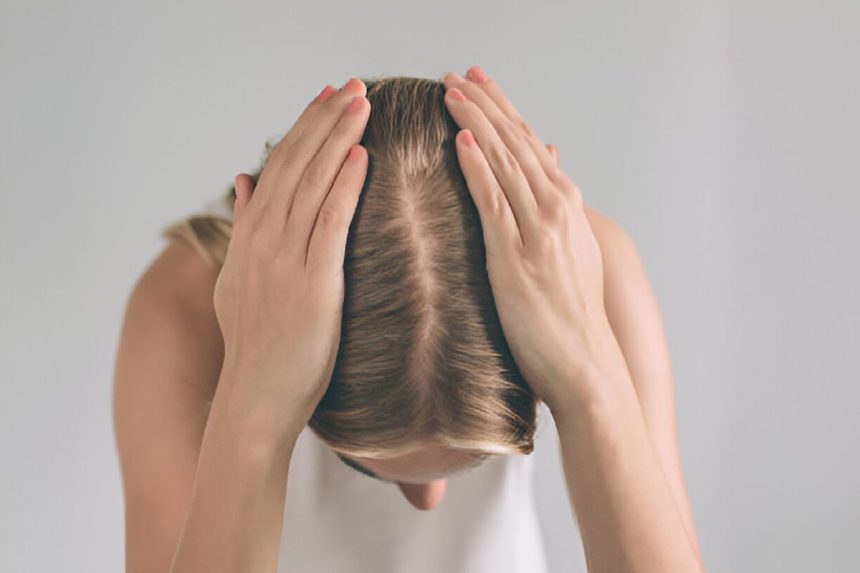
Female Alopecia: Hair loss in men is habitually an inherited genetic disorder and is, therefore, a lifelong process; But, what are the reasons that predispose to hair loss in female alopecia? In some women, hair loss can begin at an early age, even during puberty, while in other cases, it occurs at the beginning of menopause.
Table of Contents
What is Female Pattern Baldness?
Female pattern baldness, also known as female pattern hair loss (FPHL) or androgenetic alopecia in women, is the most common type of hair thinning affecting up to 40% of women by age 50.
It involves gradual hair loss primarily on the top of the scalp, often widening the center part without receding the front hairline.
Genetics play the primary role, making hair follicles sensitive to dihydrotestosterone (DHT), an androgen hormone that shrinks follicles over time, shortening the hair growth cycle.
Other factors include:
- Hormonal shifts, like post-menopause estrogen decline or conditions such as PCOS.
- Aging, family history, low vitamin D/ferritin, stress, or heavy menstrual blood loss.
Symptoms
- Thinning at the crown and along the part line.
- Wider scalp visibility, especially when hair is wet.
- Increased shedding, but rarely full baldness or patches.
Treatment Options
Early intervention works best. Minoxidil (topical, e.g., Rogaine 2–5%) is FDA-approved and regrows hair in 60–80% of users after 6–12 months.
Additional approaches:
- Oral spironolactone or finasteride (off-label for women).
- PRP therapy, low-level laser, or hair transplants for advanced cases.
- Lifestyle: Balanced diet, stress management.
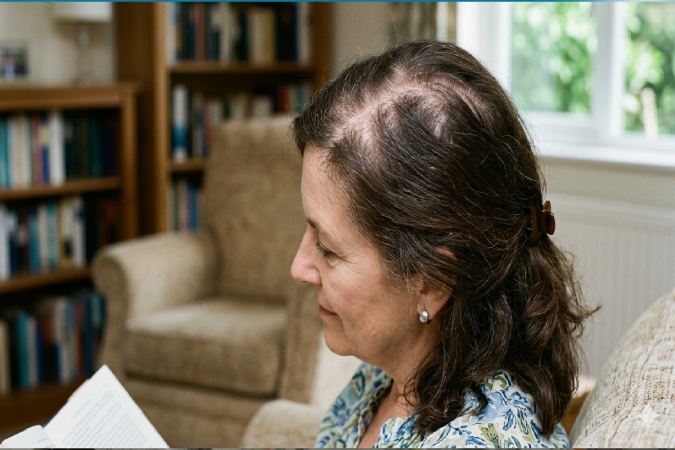
The causes of alopecia can be multiple:
- primary hair or scalp dysfunctions
- consumption of certain drugs,
- psychological disorders,
- structural or congenital hair dysfunctions,
- systemic pathologies,
- trauma
- genetic factors.
In mutually men and women, the most common cause of hair loss is a hereditary high sensitivity to the action of androgens (male hormones) in the follicles of the scalp.
In women, due to sensitivity to these hormones, the hair on the scalp becomes very thin with a smaller diameter (miniaturization) and falls out. These changes can also be associated with other causes (iron deficiency, hormonal changes during pregnancy, menopause, oral contraceptives, hysterectomy).
For all these reasons, determining the cause of hair loss in women can be more difficult than in men and requires more careful examination to select the most appropriate treatment.
Consequences Of Female Hair Loss
When a patient notices serious hair problems associated with hair loss, they generally experience various psychological effects, including feelings of sadness, confusion, and helplessness.
Regardless of appearance and structure, a woman’s hair plays an important role in her image. Shiny, healthy hair is the perfect foundation for any face, helping to bring out the pleasant features and hide the less pleasant ones. Women with alopecia treat this problem with the same or more attention than men. This generates insecurity, insecurity, and isolation.
Treatment Of Female Alopecia
There are a host of hair loss treatment options available today. We can find many nutritional supplements that contain biotin to improve hair quality. Still, they cannot prevent the progression of genetically programmed female pattern baldness and, in that sense, are intended for healthy hair.
Unfortunately, many hair loss remedies that use herbs and vitamins have no proven clinical evidence.
The Food and Drug Administration (FDA) has only approved two treatments to delay hair loss that are beneficial for some patients: oral finasteride and topical minoxidil. Additionally, these medications can also help optimize the results of surgical hair restoration.
Currently, in addition to FDA-approved drugs, there is evidence of good results in individual patients. When used and treated with a low-power laser that acts by photostimulating the hair follicle.
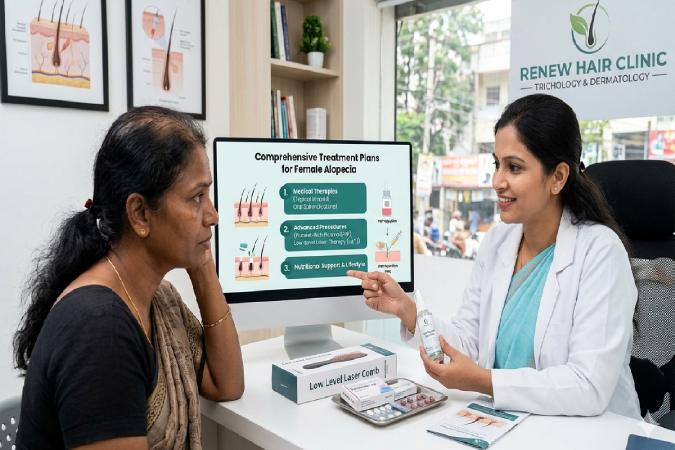
Advantage has observed, obtained mainly for hair loss control using platelet-rich plasma (PRP). A simple process of securing plasma from the same patient’s blood, making the procedure safe and risk-free.
If hair transplantation finally needs to consider. A clinical diagnostic examination by a doctor is vital. A series of laboratory tests will be necessary. Such as a biochemical profile, serum iron, hormonal profile, thyroid hormone levels, and sometimes, if necessary, a scalp biopsy.
Diagnosis and Tests
Diagnosis of female pattern baldness (FPHL) relies primarily on clinical evaluation rather than complex tests, as its pattern is distinctive.
Diagnostic Process
Doctors start with a physical scalp exam, measuring part width and noting thinning at the crown without frontal recession or patchy loss. They’ll review your medical history: onset age, family baldness, recent stressors, medications, menstrual irregularities, or symptoms like acne/hirsutism suggesting hormones.
A gentle hair pull test follows: 50–60 hairs tugged from multiple areas; >6–10 telogen (club-shaped) hairs, especially short ones (<3cm), indicate FPHL over sudden shedding (telogen effluvium).
Common Tests
Ruling out mimics prompts targeted checks.
| Test Type | Purpose | When Used |
| Densitometer | Measures follicle density/thickness | Confirm miniaturization |
| Blood Work | Ferritin, vitamin D/B12, thyroid (TSH), hormones (testosterone, DHEA-S if PCOS suspected) | Iron deficiency, endocrine issues |
| Scalp Biopsy | Examines follicle miniaturization | Rare; for scarring alopecia doubt |
| Trichoscopy | Magnifies scalp for vellus hairs, peripilar sign, yellow dots | Non-invasive pattern confirmation |
| Wash Test | Counts shed hairs post-5 days no shampoo | Differentiate from diffuse loss |
No single test confirms FPHL; it’s the pattern plus exclusion of thyroid, anemia, or autoimmune causes. Early diagnosis via dermatologist improves outcomes.
Management and Treatment
Management of female pattern baldness (FPHL) focuses on slowing progression, promoting regrowth, and addressing underlying factors, with early treatment yielding the best results.
First-Line Treatments
Topical minoxidil (2% or 5%) is the only FDA-approved option for women. Applied twice daily to the scalp, it boosts blood flow to follicles, reducing loss and regrowing hair in 60% of users after 3–6 months (5% foam superior to 2% in trials). Side effects: initial shedding, scalp irritation; continue indefinitely or loss resumes.
Prescription Options
For hormonal cases:
- Oral spironolactone (100–200mg daily) blocks DHT/androgens; effective in 40–60% over 6–12 months, often combined with minoxidil.
- Low-dose oral minoxidil (0.25–2.5mg) shows promise for resistant cases but risks more side effects like fluid retention.
- Anti-androgens like cyproterone acetate (with ethinylestradiol) for PCOS-related loss.
Procedural Therapies
| Treatment | How It Works | Sessions/Results Timeline | Notes |
| PRP Injections | Growth factors from your blood stimulate follicles | 3–6 monthly; 3–6 months | Moderate evidence; ₹10–20k/session in India |
| Low-Level Laser Therapy (LLLT) | Red light energizes cells | 3x/week at-home cap; 4–6 months | Non-invasive; devices ₹20–50k |
| Hair Transplant | Follicles moved from donor areas | 1 session; 9–12 months | For advanced thinning; ₹50–150k |
Lifestyle and Supportive Measures
- Supplements: Iron/ferritin if low (<70 mcg/L), biotin (2.5–5mg), vitamin D; evidence mixed.
- Diet rich in protein, omega-3s; gentle hair care (volumizing shampoos, avoid tight styles).
- Camouflage: Toppik fibers, wigs, or scalp micropigmentation.
Success rates vary (30–70%); combine therapies for synergy. Consult a dermatologist for personalized plans, as no cure exists but progression halts in most.
What is the success rate of PRP therapy for hair loss
PRP (platelet-rich plasma) therapy for hair loss shows success rates of 70–84% across clinical studies, particularly for androgenetic alopecia like female pattern baldness (FPHL).
Key Success Metrics
- 84% of patients in a 2025 systematic review of six studies reported positive results (improved density, reduced shedding).
- 70–80% notice thicker hair and less loss after 3–4 sessions (monthly), with gains of 22–46% in hair count/thickness by 3–6 months.
- Long-term: Only 20% see significant recurrence at 12 months post-treatment.
Realistic Expectations
Best for early/moderate thinning (Ludwig I-II stages). Results vary by:
- PRP concentration (higher platelets = better).
- Protocol: 3–6 sessions, then maintenance every 6–12 months.
- Combo with minoxidil boosts outcomes to 87% satisfaction vs. 38% for minoxidil alone.
| Study Year | Success Rate | Hair Improvement | Notes |
| 2025 Review | 84% | Density ↑30–40% | Multiple trials |
| 2014 Trial | 70%+ | Follicles ↑23% | Small sample (n=11) |
| 2019 Trial | Superior to minoxidil | Thickness ↑31% | n=30 completers |
Platelet levels matter – low baseline reduces efficacy. Minimal side effects (mild soreness); consult dermatologists for personalized protocols, as it’s not FDA-approved specifically for hair loss.
Conclusion:
Female pattern baldness (FPHL) stems from genetic follicle sensitivity to DHT, but unlike men’s lifelong androgen-driven process, women’s hair loss often accelerates due to hormonal, nutritional, and lifestyle triggers across life stages.