




A rhytidectomy (also known as a facelift) involves tightening of the loose skin and the muscles beneath to give a person a younger look. The people who enter the query of how to get the best facelift results are after concrete instructions on how to attain natural, long term rejuvenation and reduce the risks. This guide presents step-by-step plans with support of the best practices in the field of surgery.
Table of Contents
Understand Facelift Types for Optimal Choice
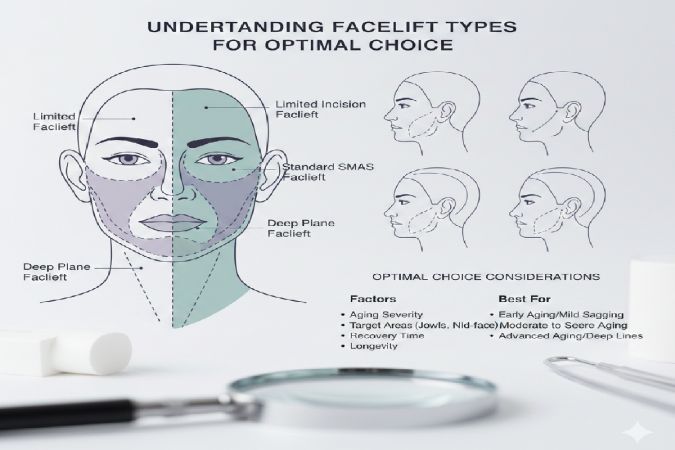
Facelifts are also differentiated to suit your requirements. Conventional face lifts deal with entire facial aging; mini-face lifts deal with mild jowls, deep plane lifts relocate deeper tissues to achieve dramatic and natural effect. Choose depending on age-related issues such as deep nasolabial folds or loose skin around the neck.
- Traditional: Ideal in terms of full mid-face and neck lift.
- SMAS plication: Tension balancing to reduce visible scars.
- Endoscopic: Minimally invasive to the younger patients.
Correlate the process with your anatomy to achieve better results.
Choose the Right Surgeon and Timing
The American Board of Plastic Surgery board certification is a guarantee of expertise. Pre-visit post-visit images of similar patients and confirm hospital privileges. Time when in good health, not a smoker, and at the right weight, preferably when in 40-60s when your body is still rigid without serious sagging.
According to the industry norm, surgeons who have performed 1,000 or more facelifts have complication rates less than 2%. Seek advice of various experts to reach a common ground, say 10-15 year revival..
Prepare Thoroughly Before Surgery
Optimization of pre-op improves healing and outcomes. Stop smoking 4-6 weeks before enhancing blood flow in the skin; keep hydrated and feed on a nutritious diet that is rich in vitamin C and zinc. Blood thinners such as aspirin should be avoided 2 weeks pre-operative.
Obtain heart check and blood medical clearance. Planning:Plan through 3D imaging so that goals are discussed. These measures decrease by 30 percent and enhance uniform scarring.
Master Intraoperative Factors for Precision
Premier methods such as the deep plane facelifts maintain ligaments to natural movement. During surgery, fat grafting helps to restore volume, avoiding the pulled appearance. Local block general anesthesia reduces downtimes. Scalpels with harmonic burins will create less trauma on the tissues, resulting in his quicker healing time and smaller scars. Request these if suitable.
Prioritize Post-Op Recovery Protocols
Follow surgeon directives strictly for peak results. Elevate head 30-45 degrees first week to curb swelling; apply cold compresses 20 minutes hourly. Start light walking day 1 to prevent clots.
| Recovery Phase | Key Actions | Expected Timeline |
| Week 1 | Rest, no bending/stooping; pain meds as prescribed | Bruising peaks days 3-5 |
| Weeks 2-4 | Gentle cleansing; avoid sun/alcohol | Stitches out; 70% swelling gone |
| Months 1-3 | Scar massage; silicone sheets | Full contour emerges |
| 6+ Months | Microneedling if advised | Final results stabilize |
Adherence cuts revision rates by 50%.
Avoid Common Mistakes That Ruin Results
Overlooking lifestyle sabotage longevity. Skipping sunscreen accelerates UV damage; poor diet delays collagen rebuild. Don’t rush return to work—wait 10-14 days.
Rushing intense exercise pre-4 weeks risks hematoma. Unrealistic hopes for “ageless” skin lead to dissatisfaction; aim for refreshed, not 20s reversal.
Enhance Longevity with Maintenance Habits
Results endure 10-15 years with upkeep. Daily SPF 50+ prevents photoaging; retinoids boost collagen. Hydrate, sleep 7-9 hours, and manage stress via yoga.
Nonsurgical boosters like fillers every 1-2 years sustain volume. Annual check-ins catch issues early. Healthy habits extend benefits 20-30%.
Real Patient Outcomes and Statistics
Studies show 85-90% satisfaction rates when expectations align. A 2023 review found deep plane techniques yield 12-year durability vs. 8 for traditional.
Case: 52-year-old with SMAS facelift plus fat transfer saw jowl elimination, lasting 11 years with fillers.
FAQ Section
How long do facelift results last?
Typically 10-15 years, depending on technique, skin quality, and lifestyle. Deep plane lasts longest.
What’s the best age for a facelift?
Mid-40s to 60s, when elasticity fades but skin quality remains good for natural healing.
Can I combine facelift with other procedures?
Yes, often with eyelid surgery or neck lift for comprehensive refresh; boosts overall harmony.
How much swelling is normal?
Significant first week, resolving 80% by week 4; asymmetry evens out by month 3.
Will scars be visible?
Minimal, hidden in hairline/crevices; fade to faint lines in 12 months with care.
Final Conclusion
Rhytidectomy is a 10-15-year natural rejuvenation of sagging skin and muscle with results compared to other methods because it uses only board-certified surgeons and 1,000+ procedures (2% complication rate), better timing (40s-60s) and methods such as deep plane or SMAS depending on anatomical type which are supported by 85-90% post-surgery satisfaction rates due to met expectations.
Comprehensive preparation (quitting smoking 4-6 weeks, nutrient-based diet), rigorous recovery (elevating the head during the first week, taking care of the scar and doing the fillers in the first 3 months), and maintenance (applying SPF 50+ daily, practicing yoga, applying fillers) can reduce revision by 50 percent, and prevent the pitfalls of rushing into the exercise or getting sunburned. Week 1 bruising to Month 6 stabilization, consistency provides renewed contours that last-check with numerous professionals and invest perfectly to have ageless, risk-reduced glow.